
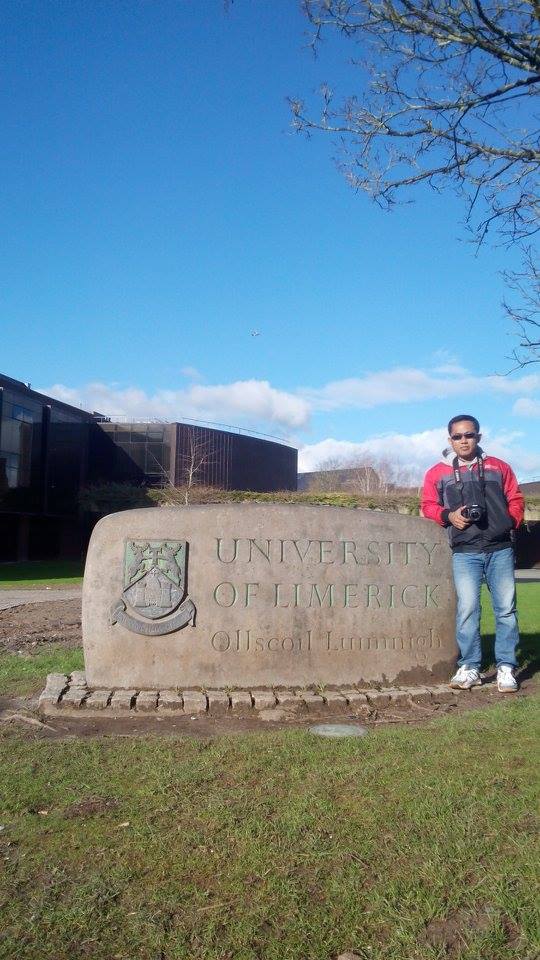
Yanuar Dwi Prastyo, S.Pd.I., MA., Ph.D.
Director of Teaching Learning Centre, Universitas Bandar Lampung.
Dean of Teacher Training and Education Faculty, Universitas Bandar Lampung
In this interview a PhD alumnus of UL, Yanuar, answers questions about the impact his studies in UL had on his career:
My first question for you today is, can you tell me a bit about your PhD? What was your topic?
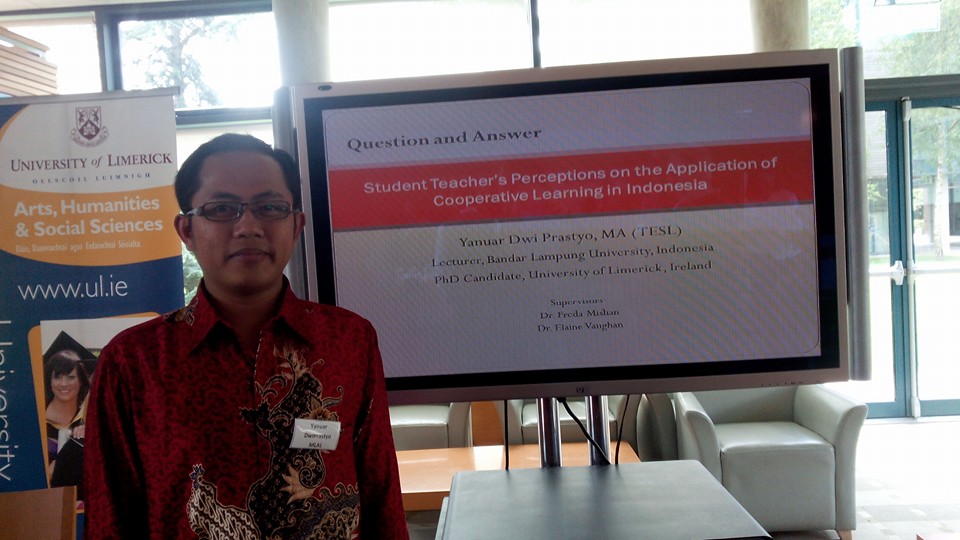
I did my PhD in 2013 until 2018 and the topic of my PhD is regarding cooperative learning, teaching methodology on students, communicative competence for student teachers in Indonesia.
I was always passionate with how I can help my students to learn English, not only for the subject and at the university, but also how they can use English for their communication.
I was investigating whether using cooperative learning, teaching, and learning techniques will be able to effectively improve the students, communicative competence by using English.
What attracted you to this topic?
I have always been passionate about how Indonesian people can improve their communicative competence, especially by using English. Because as you know, in Indonesia, English is a foreign language. So, students only learn and use the English language in their schools when they are studying English subject. That means that, sometimes, they don’t really learn English by using English for daily communication and for communicating with other people. They only learn English to pass the school subject, so I wondered at the time, how can I help the students when their chance to speak English is only very limited at school? What kind of teaching methodology will they interact with? How do we motivate them to use English?
At the time, I was researching cooperative learning. I was interested in how we can use this cooperative learning in which students use English for their daily communication, so they can improve their communicative competence.
How did you enjoy your time in UL?
I really enjoyed my time in Ireland, even though it was my first time living in Europe, which is far away (from Indonesia). The culture, the social conditions, it’s quite different to Indonesia.
Anyway, I really enjoyed my time in UL, especially the First Seven Weeks program. I still remember the program in which it introduced new students with the culture of Ireland, with how we can go through the schools, the subjects, how do we get to know the lecturers, university facilities and everything about UL and Limerick. I think the First Seven Weeks left me with a very interesting experience during those important first few weeks in Ireland.
We also have a lot of facilities in UL, especially the library, the PhD offices, and the community in which we have transferable skills, such as the Regional Writing Centre. I think as a PhD student, sometimes you only communicate with your supervisors, so that kind of community which provides the opportunities to share your interests with other people is great.
I think it’s really helped the PhD students, especially for those who are living far away from their families, so meeting new friends and new communities. I think it helps a lot with our health and mental health.
What about UL appealed to you before you came to UL?
At that time, I searched for universities with structured PhD, especially in TESOL. My educational background for my bachelor’s degree is Teaching English as a Foreign Language and for my Master’s, I studied English in India. English is a second language, so I was keen to find out the PhD program (in UL) focused on Teaching English to Speakers of Other Languages because, at the time, I searched through Google, and I found that UL was the only University who very clearly mentioned in the PhD in TESOL. I was very interested because in my search, I only found two Universities which specifically mentioned PhD in their (TESOL programmes). One of them being University of Limerick, so I was really interested to apply there.
How difficult was the application process?
It was very easy because when I searched for the structured PhD and saw it was offered by University of Limerick, I found Prof. Fiona Farr’s details – the course director. I also found out about other lecturers at UL, especially in structured PhD in TESOL. I dug deeper on their TESOL interests and sent my application to Prof. Farr, with my CV, my English competency, as well as my personal degree certificates, and within a week, Prof. Farr got back to me and arranged an interview through Skype. The panel interviewed me, and we discussed my research proposal. I think, the second week of each month, the panel at the university has their meeting to decide on candidates. I thanked God at the time as I was accepted into the programme. They sent me my Letter of Acceptance which I used to apply for scholarship in my government.
The process is very clear, and it takes a not very long time because they have the time schedule for the process.

Can you tell us a bit about the Indonesian scholarships that are currently being made available to academics in Indonesian universities?
The scholarship currently open for application is Indonesian Education Scholarship (Beasiswa Pendidikam Indonesia). It receives application twice a year (May and October). Here is the link for Beasiswa Pendidikan Indonesia: https://beasiswa.kemdikbud.go.id/
Do you have any advice for anyone who might want to do PhD at UL?
From my experience, I think what people need to do before they apply for PhD in UL is to develop their research proposal, find a supervisor working within their research interest, then contact a potential supervisor, whether directly or through the course coordinator. The course coordinator will circulate your research proposal and find potential supervisors for you.
I think in addition to the PhD research proposal, the most important thing is your English competency.
Because, sometimes, lecturers from Indonesia don’t have their English certificates. So even though they can get the supervisor, they still need to complete the requirements for the English language proficiency.
Finally, how has being in UL affected your career?
I think having a PhD from UL has influenced my future career and my career presently. Having a PhD from such a great university, people see that I have a good capability, especially as a lecturer in English education. Once I finished my PhD from UL, it wasn’t long before I was appointed as the Dean of Faculty of Education in my university.
Then, in 2021, as the Indonesian Government, they have new policy, Merdeka Belajar, which emancipated learning for junior high schools until the university level. I was honoured to be appointed by Ministry of Education, Culture and Research and Technology in Indonesia to be the leader for Duta Kampus Merdeka.
It is a community organization that foster the implementation of Merdeka Belajar, Kampus Merdeka. I think starting in UL, we can start thinking beyond the academic because you have transferable skills. We learn to improve our skills and feasibility in academic career. I think those transferable skills are very helpful for us to develop our career once we have finished the PhD from UL. I met some other people from the University of Limerick, and I think it’s great to help UL to promote PhD in in Indonesia.


 Study Ireland - Stories & Guides from International Students
Leave a comment