
When people say thesis, most students react the same way villagers react when someone whispers, “There’s a dragon in the mountains.”
A mixture of fear. Confusion. Mild denial.
I was no different.
When I first began thinking about my final thesis for my Master’s in Interaction and Experience Design at UL, all I really knew was that I wanted to design for older adults. Everything else was foggy.
What exactly would I design?
Who would I work with?
Would I spend months alone in a room arguing with sticky notes?
Highly possible.
Then, in classic hero-story fashion, a mentor appeared with life-changing quests.
The Unexpected Plot Twist
One of my lecturers mentioned several live projects he was involved in and encouraged students to apply if any aligned with our interests. This is how I accidentally wandered into something much bigger than a thesis.
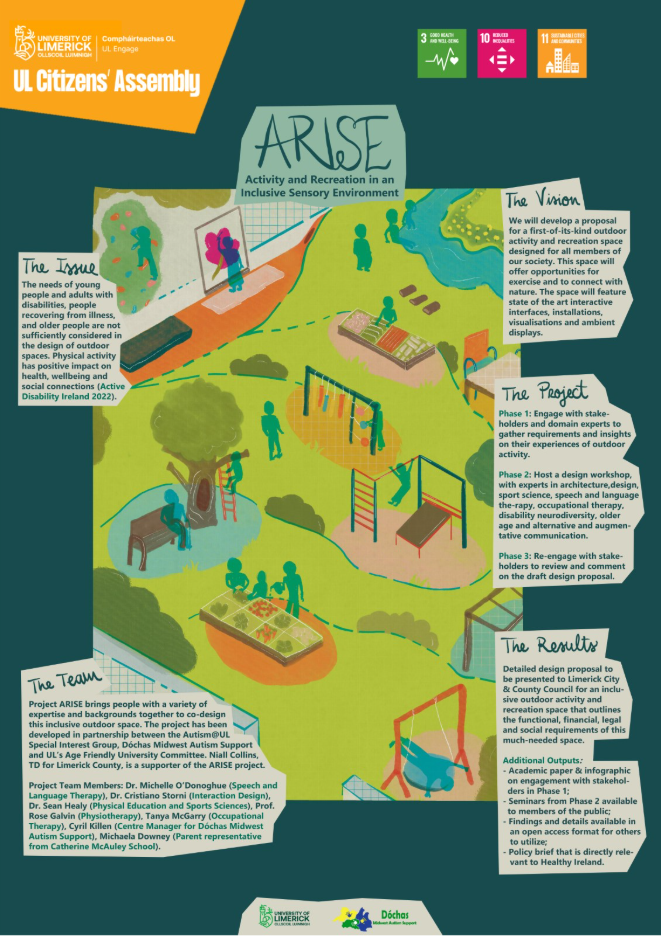
The project is A.R.I.S.E: a collaboration between UL researchers and Limerick City and County Council to help create an inclusive sensory garden, especially for autistic, disabled, and older people. A real garden, an actual community space designed for wellbeing, accessibility, and connection, not a fictional prototype hidden inside PowerPoint slides.
I applied. I got in. And even better, I am not alone.
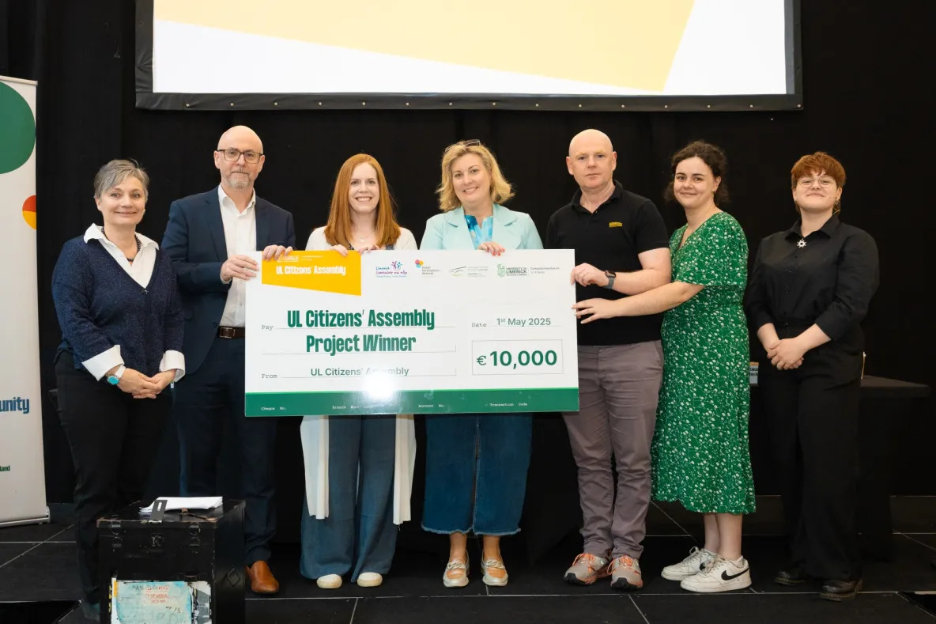
Two classmates joined the same wider initiative, and each of us focuses on different user groups and research directions. Our projects are individual, but our journey is shared. This may not sound dramatic, but trust me: during thesis season, companionship is more valuable than treasure. While many students battle deadlines solo like wandering knights, we have comrades who are always available for support.
Need feedback? Someone’s there.
Need motivation? Someone’s there.
Need to complain about referencing systems designed by ancient chaos spirits? Definitely someone is there.
We work separately, but never in isolation. That support’s changed everything. Because no matter how independent you are, there is magic in hearing someone say, “Same. I’m struggling too. Tea?”
Yet the support extended far beyond the three of us. From experienced researchers who guided us through uncertainty to community partners and stakeholders who generously gave their time, the project felt less like a student assignment and more like joining a crew already sailing toward something meaningful.
A Thesis With Real Impacts
The strangest and best part of all is that this is not pretend work. It is real, with real stakeholders, real timelines, real meetings, real people who might actually benefit from what we create.
When I know my work could help shape a real public space, I stop asking, “How many words do I need for this chapter?”
Instead, I start asking better questions.
Will this idea actually help someone?
Is this inclusive enough?
Have we listened carefully enough?
Can this survive contact with reality?
Those are far more interesting questions than word counts.
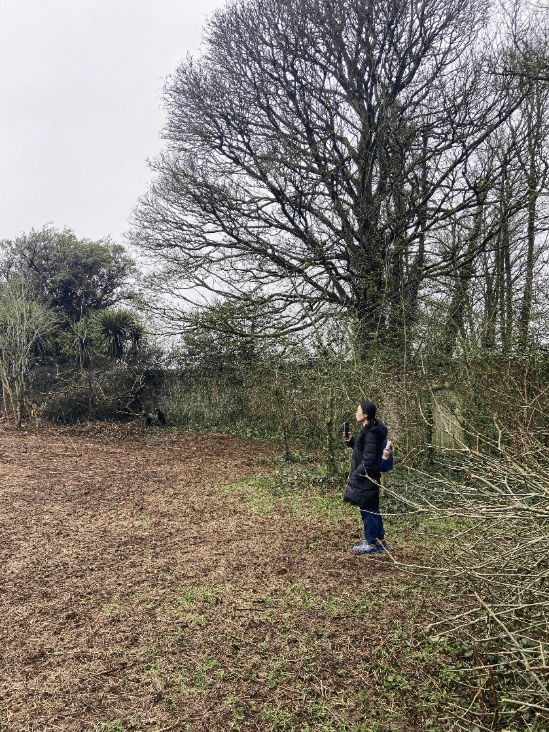
Me recording the site during our first site visit
The Secret Shortcut: Community Networks
If you have ever tried recruiting participants entirely on your own, you will know it can sometimes feel like trying to summon mythical creatures through email. You send carefully crafted messages into the void and hope something noble answers.
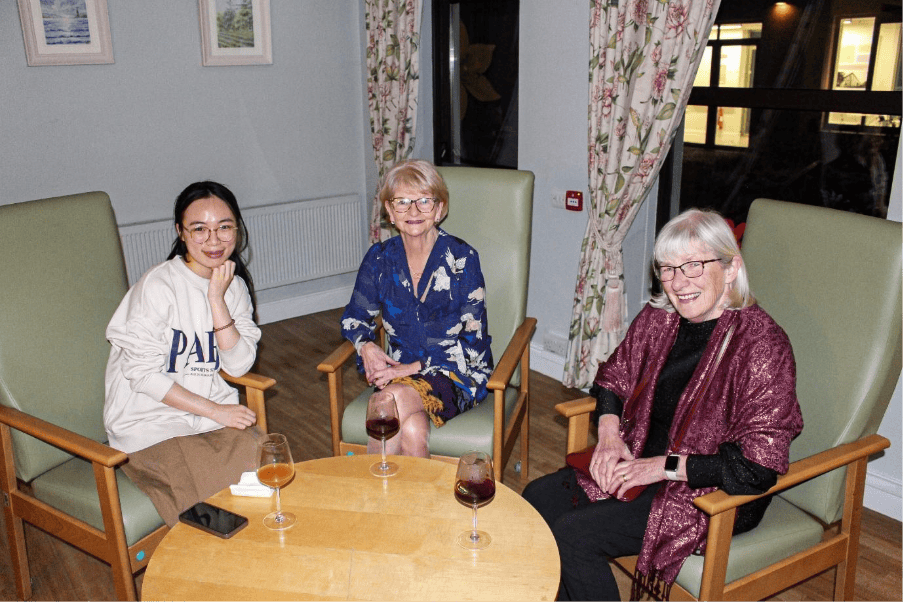
Thankfully, I do not have to rely on magic alone. I already had a connection with Milford Care Centre through my volunteering there, which made many early steps feel far less intimidating. Recruitment is much more straightforward, and participant engagement felt way more natural than starting from absolute zero.
Through the wider project team’s connections, I also have access to a more diverse pool of participants. That means I can have richer conversations, deeper insights, and perspectives from people with very different experiences of ageing, care, and public space.
All in All…
Before this experience, I thought a thesis was something you completed. Now I think it is something you can join. At UL, I discovered that academic work does not have to stay trapped in documents and folders. It can step into the city and communities. It can matter now, not just later. And for a student, that is a rare kind of motivation.
If you arrive at UL with only a vague sense of what you care about, no need to panic. You do not need the whole map; sometimes, you begin with only a compass. For me, that compass pointed toward inclusive design for older adults. UL helped turn that direction into a real project, a real team, and a real impact, which is far better than spending six months alone with sticky notes.
Though, to be fair, the sticky notes still came.



Leave a Reply