

Time in Tucson – University of Arizona & Tucson Fire Department
During orientation week, when I first heard about the Dr Sheila Boland Scholarship, I thought it sounded like an incredible opportunity, never imagining I would one day be the recipient. My practicum in Tucson offered me invaluable work experience, indelible memories, and lifelong friends. As the first female recipient of this scholarship, I am deeply grateful for the opportunity and want to sincerely thank the UL Foundation, the UL School of Medicine/Public Health, and the University of Arizona MEZCOPH for making every step of the process so smooth.

When I arrived at Tucson International Airport, I was greeted by the starry sky, nighttime desert breeze and the striking sight of towering cacti. In the following days, I became fascinated by the unique cactus species native to the Sonoran Desert, some of which I had never seen before. I learned about them, collected cactus-themed souvenirs, and, unexpectedly, found a life metaphor in the saguaro cactus. I admired their resilience: standing tall through adversity, maintaining goodness despite harsh conditions, and continuing to grow after trauma. These became powerful symbols of post-traumatic growth for me; a lesson I will carry with me.

Beyond nature, I was warmly welcomed by Tucson’s diverse and vibrant community. I visited the University of Arizona campus, where I met faculty and students and attended events hosted by the Global Health Alliance. There, I witnessed the energy and dedication of public and global health professionals, people passionate about creating real change for communities and the planet. Their work and advocacy reminded me of why I chose this field.


My main project was with the Tucson Fire Department, promoting mental health among first responders. I was honored to bring the award-winning Irish initiative HUGS at Home to Tucson. This program aims to build better support systems at home by offering psychological first aid to family members and close friends of first responders, helping them support their loved ones after difficult shifts or traumatic calls.
To understand contextual factors and needs, I was fortunate to spend time with dispatchers, firefighters, and community navigators. These interactions were eye-opening. As a public health professional, I was able to observe the many social determinants of health in action — how they affect individuals, how they contribute to disease, and how systems can either buffer or exacerbate these effects.
During this time, I often thought of a poem I had written a few years ago, when I was still struggling to find my own purpose. After my practicum, I realized I had met people who were purpose in action — first responders who serve with courage, heart, and an unshakable sense of duty. Their example was deeply moving.

As part of the HUGS at Home initiative, I also conducted surveys and interviews. The results of this qualitative research will be published soon and will help guide the implementation of the programme. A resource booklet is in development, and training sessions will soon begin. I’m proud to have played a role in this historic launch – or perhaps, in shaping what lies ahead. I was fortunate to present this project at the Southern Arizona First Responders Wellness Day Conference on 30th April.

Of course, my time in Tucson wasn’t only about work. I had the joy of ticking off a few items on my American bucket list. I attended a baseball game — the crowd’s energy and the fierce rivalry were just like in the movies. I also hiked Tumamoc Hill, and when I reached the top, the breathtaking view of the city made me understand why people fall in love with hiking. I was also able to visit Tombstone and learn about the historic stories of Wild West!
From the beautiful Palo Varde, the hummingbirds and starry desert nights to the delicious food and incredible people, my time in Tucson was unforgettable. I still miss the warmth of the city, not just its sun, but its spirit. I arrived as a visitor and left with a sense of connection, purpose, and growth.
Tucson gave me more than I expected. And I hope to return someday, to the desert that helped me bloom!
Ride along with firefighters
On 11th April, Friday morning, at 8 am, I was standing in front of the Station 8 building, juggling with my bag and box of doughnuts and looking for the door or point of entry, just like everyone told me that first responders would be hard cookies to break. Finally, I was able to spot the bell and suddenly Captain and other crew members were at the door welcoming me. I am in the station! Will I be able to break in their personal walls, I wondered!
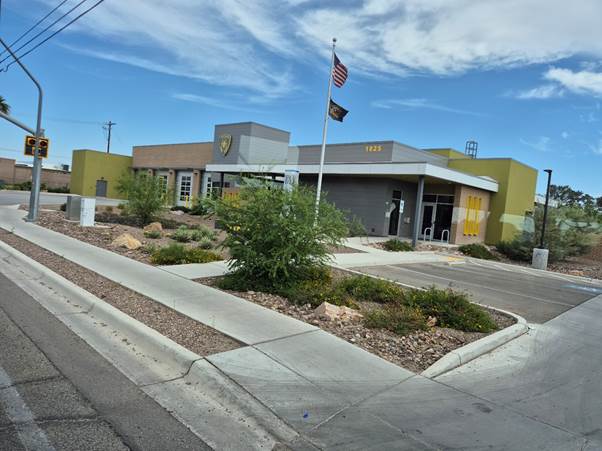
After the introduction, Daylon kindly gave me a tour of the station. He is the probationary firefighter there, and I could feel how proud he is of his work and this service. As he should be! He can save and potentially change the course of people’s lives.
Meeting and listening to Captain Crystal was an amazing experience. I talked to her in detail about women in service, their difficulties, and how they have to do 10-fold work to prove themselves. I even witnessed misogyny by one of the injured people whom she was helping. When I questioned her, she said I could not let such comments affect my job.
I was with them for about 9 hours and attended five calls. The first call was about an older lady fainting at Circle K. It was relatively a simple call; she missed her morning medicines and assumingly breakfast as well. However, one of the barriers was that the lady was not comfortable talking in English. Luckily one of the Paramedics knew Spanish and communicated with her. As a Public Health professional, I was able to identify how necessary linguistic and cultural competencies are.
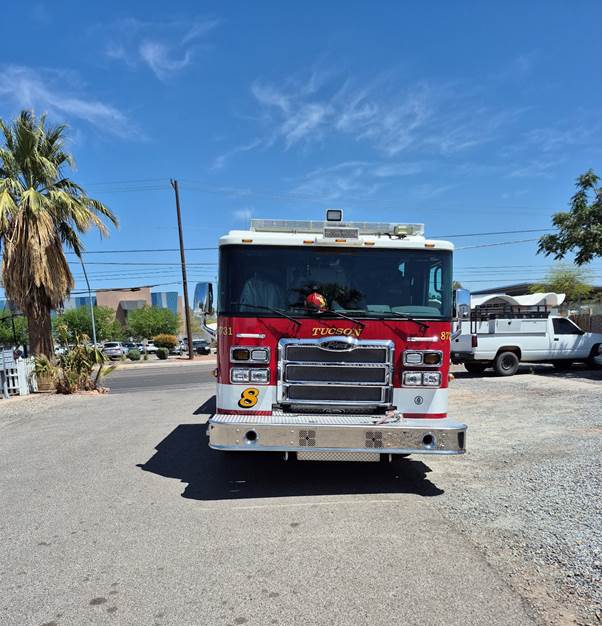
The next one was about the vital checks for The Wrap Restrain arrest, I was not aware of this manoeuvre. It is a relatively newer arrest method, where non-cooperative individuals are temporarily put in a full body restrain device that immobilizes a person in the upright position. First responders check vitals. This restraint method reduces the chance of accidental/incidental deaths during arrest.
The third call was from a household where an old lady was vomiting blood. We arrived at the place and met two home-care assistants who called the dispatcher. She was hospitalized recently with a cardio-pulmonary issue. While waiting for her BLS ambulance, I observed her home and saw a lot of family pictures, books and clothes. I could see that she lived a proper life there and kept wondering what happened to her, and how she got to this point. Is it the loneliness contributing to mental and physical health? I kept building her backstory. I even imagined my parents. I kept thinking about it and I could see how different determinants of health must have impacted her. Interestingly, what conversation first responders were having was different from what was on my mind. As an observer, I could see them dissociating from reality and troubling thoughts.

When we returned to the Station, the Captain told me about one of the potentially traumatic calls they attended where they had to give medical support to a 45-day-old newborn and how that call impacted them. Furthermore, while attending the call, they all witnessed the struggles of a single mother with a sick newborn and 2 other young kids. That made me think that should there be a mechanism where first responders can get the end news of their calls as well. Surely, knowing what happened to such calls will give them peace. When I asked Captain, She agreed to the idea and told me that sometimes they can get the idea from hospitals and in this case, they were aware that the baby is now recovered and discharged and doing well which gave all the crew a sense of relief. Captain told me that all crew members wanted to help the family and all chipped in to buy some gifts and gift cards so they could use them as per need. I wanted to contribute to the noble cause, but they did not let me. Engine and Paramedics all drove to her place and I could feel how liberating this was to assist that family. The mother was in tears, and I saw Captain rubbing her eyes as well. As a community engagement passionate public health professional, It was a heartwarming and inspiring moment for me. Who says they’re all muscles? They are some of the most empathetic people you’ll ever meet, with hearts of gold and a strong sense of purpose.

During lunchtime, I could observe their deep bond and how they were joking around. I could feel how local news and community issues impact them. I could feel how much they rely on each other in any sense.
The next call we got was of an injured man. When we reached the scene, it was a double-leg below-knee amputee who slipped from his motor wheelchair while going in the taxi. First responders helped him settle in and then followed the taxi so that they could help him get out of the car and settle in his home. During that time, I was told that they had attended to this person multiple times in the last 24 hours. They arranged a meeting with TC3 – Tucson Collaborative Community Care to resolve his issues regarding chair adjustments.
My shift was ending, so I asked if it was ok to use the bus, and immediately, they wanted to drop their “little Munchkin” (Rob gave me this title) home safely. I was truly touched. Almost near my place, they got a call, and I was able to attend another call. This time it was a good neighbourhood; an old man was suspected of a stroke, but it ended up being an infection. With his medical history and current issues, they called for an ambulance and sent him to the hospital. I could observe how the support from family and other socioeconomic determinants are contributing to his general health and well-being.
After this, I was dropped off at home. I wondered what they attended next. I could understand how this job makes them humble and grateful for their life. We often talk about Post-traumatic stress disorder, but I witnessed Post-traumatic growth as they get more resilient and charged with a sense of purpose and community engagement.

This ride-along was an amazing, eye-opening experience. Thank you, Station 8 – Shift A, for your warm welcome and for letting me understand the complexities of your job and healthcare systems. Thank you for your service!
Update:
I am delighted to share that TFD read my reflection piece and recognised their efforts to go above and beyond to help that single mother. Chief Sharon, with other Deputies, visited Station 8 on 8th May. Luckily, I was there too. The department gave them citations – service recognition awards. I am so grateful to witness a full-circle moment like that. It made this piece and my experience even more memorable.


Thank you for welcoming me and showing me the depth and amazing work, you do.
My time with Community Navigator as a Safety & Wellness Intern
Tucson has a unique programme called Tucson Collaborative Community Care TC3, which was interestingly designed by a firefighter, Captain Mike Bishop, who noticed that some non-emergent complaints are repetitive and can be addressed by resource allocation. In his free time, he started helping people connect with different available resources. This decreased the overutilization of the Fire Department and the hospital burden. This idea led to the piloting of TC3 in 2016 in collaboration with the Tucson Fire Department and the Tucson Medical Centre. Since its start, TC3 has been able to save a lot of money annually by simply connecting people in need with the right connections.

On Tuesday morning, I joined Alexia (Community Resource Navigator TC3), who briefed me about TC3 and their wide range of services. When a crew member of TFD or staff at TMC notices that the issue can be resolved by other means, they call TC3. They then contact them on the telephone within a week. If the client is not accessible, then they add them to the door knock list and visit them in person. If, after 3 visits, a client is still not approachable, then they put that case on hold and check again after some time. Their program is participatory, not mandatory. They guide and advocate and let the person in need take charge of the decision. Their philosophy is “whole person care” and not offering a quick fix. Alexia said that they are like outfielders in a baseball game. If she had made that reference some other day, I would not have understood it; luckily, I was able to attend a baseball game and see how much work outfielders do. Their role may seem passive in the game, but their work makes a huge difference, just like the work done by TC3.
I attended their morning team meeting “huddle”, where they discuss their daily client list and what services they need to provide or if there are any new developments in previous cases. While listening to them, a case resembled a lot like the call I attended with TFD – a double amputee having struggles with his motor vehicle. On questioning, they told me it is the same person; now they are in the process of getting him a new motor vehicle. It was interesting to witness a full circle moment, me being there when they referred to TC3 and how TC3 processed it.
After the end of the meeting, I asked a few team members if they would like to share their success stories. Jason told me that one of his clients was a 70-year-old heroin addict with a medical history of cancer, living in very poor housing conditions. He was terminal but struggling a lot due to these issues. Jason was able to shift him to better care, where he eventually died. But his last days were comfortable. For many, death and success in the same sentence would not make sense. It reminded me of one of my teachers who asked us in pre-medical years what a doctor is to you. Our answers were very typical, but he responded that a doctor is a person who makes the process of either recovery or death bearable; healing is not in a doctor’s hands, a doctor is just there to assist. Many may argue with this definition of doctor, but I found it accurate in my practising days. To me, Jason’s story was one of the most successful stories I have heard. Making someone’s last days in this world more comfortable is one of the noblest acts.
Tucson is an ageing population, and many people struggle with loneliness and social isolation. Many TC3 clients are elderly people having difficulty managing themselves with unstable finances, where having a caregiver feels like a luxury. Meghan shared that her successful case would be getting a caregiver for an elderly person with mental health and Parkinson’s disease. She was also able to arrange mobile meals for them to help them with food insecurity. Again, such a great story! This is Meghna’s desk, The butterfly kite was gifted to her by a client who has passed away now.

Alexia shared her recent success story where an elderly bedridden lady with a health issue, having very little social support at home, was not willing to leave her home for better care. Her house needed some serious property maintenance, which made staying at home more dangerous. Initially, TC3 provided mobile meals, hospital beds and home health. After some visits, she agreed to move to hospice and is now getting the support and care she needed and living in a safer and better environment. To some, these stories may not create a spark, but for many, it is life-changing.
I was intrigued to know how they develop trust and connection with their clients and if they can keep boundaries, as often community service members are filled with compassion and empathy, and they tend to go above and beyond to help others. Jason told me that when they visit a new client, they make themselves emotionally available for their clients, they build a heart-to-heart connection, find barriers to change and help them overcome them. They encourage empowerment and ownership by their clients and act as facilitators of change. It all made sense to me that they “connect the unconnected”.
As I was observing every team member animatedly expressing their compassion and love for their work, I asked them how this job has impacted them. They all expressed how this job has made them more understanding of the underlying issues and causes of causes. They are more open to active listening and develop deeper connections, which is a rarity these days. They all feel having more gratitude and sense of purpose in life.
I joined Alexia for the ride-along. Her client is an elderly lady with a medical history of obesity, lymphedema and reduced mobility. She had a long hospital stay recently; the hospital had to discharge her as her annual insurance coverage ended. With her health issues, she was struggling to work properly and got the eviction notice as well.
TC3 connected her with the food bank to relieve her financial struggles. We drove there and collected a wide range of produce for her.
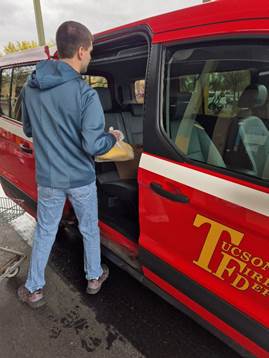

When we arrived at her apartment building, Alexia met the property manager and advocated strongly for her client. We gathered all the food items and entered her home. She was very appreciative of it. I looked around and tried to understand her living conditions. She lives with a “caregiver” (who was equally old) in her one-bedroom studio apartment. Most of the space was occupied by her belongings. Her side table was full of medicines. Her surrounding was filled with different types of plants. Her legs were swollen with oedema. As a person with a background in healthcare, I became worried for her.
I also keenly observed Alexia, how friendly and polite she was. She made her feel important and empowered. At that moment, I understood that the word “client” erases any idea of the person in need being a charity case. It brings humanity and tender loving care to the service.
Alexia started filling out her forms and registering her with the Arizona e-Healthy system. If she gets approved, the state will cover her rent and provide her with medical benefits. During this process, I could sense that she was struggling with low self-esteem and potentially mental health challenges. She made remarks like, “I am a mess”, and “I am ancient, and I have not accomplished anything”. These forms, intended for people in need, should be simple and easy to fill out, yet here we were, exhausted from trying to understand all the technicalities and requirements. She was even more exhausted and asked for a break. Alexia and I stepped out of her home to give her time and space to recover and recharge.
Similar to Tucson, Ireland is also an ageing population, but with publicly funded health and social services integrated between care settings. The American healthcare system and insurance system are foreign to me. I had so many questions. I was frustrated. The health inequalities I witnessed were deeply unsettling. It reminded me of Martin Luther King Jr.’s powerful words:
“Of all the forms of inequality, injustice in health care is the most shocking and the most inhumane.”
Our client was trying her best to recover, hoping to work full-time to earn through her online job. But her monthly income is almost her monthly rent. It felt as though she were trapped in a relentless vicious cycle.
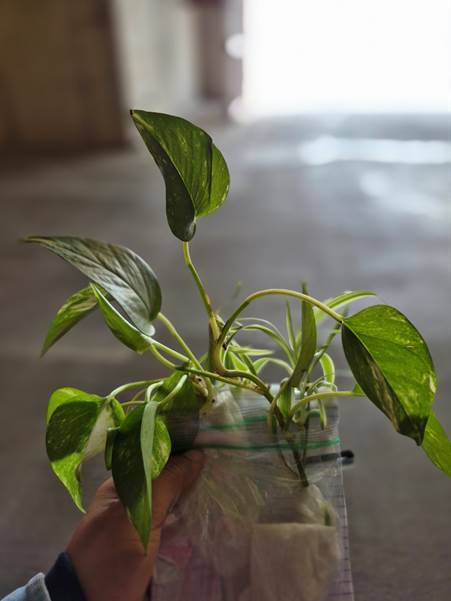
After the break, Alexia resumed her work, and I decided to test my theory that the client must have loved plants, as there were more than ten plant pots, each one unique! I casually pointed at a plant and asked what it was called. Her energy shifted instantly; for the first time, I saw her animated and full of energy. She began talking about each of her plants, reminiscing about the days when she had a bigger home with an entire garden. She even asked the caregiver to give us a starter kit and explained how to care for the plants. She seemed like a completely different person. I wondered if a concept like social prescribing would help her and many others in similar conditions.
Throughout the process, Alexia was transparent about every step. She remained friendly, composed and understanding. She was accessible and attentive to the client’s needs. I was truly impressed by her empathy and compassion. It became clear to me that their work requires creativity in using limited resources to achieve the best possible outcomes in challenging situations.
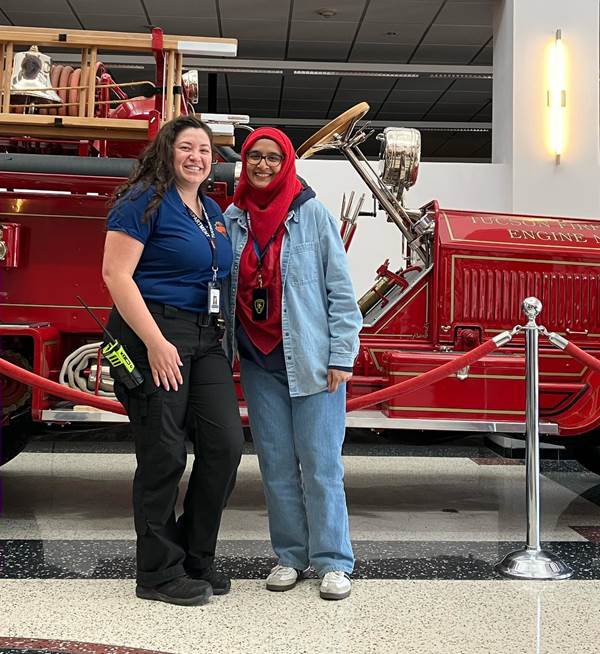
There is a viral trend on social media called “we listen, and we don’t judge”, where people share questionable confessions while listeners are expected to remain non-judgmental. In reality, many still judge. But the TC3 team truly embodies this principle. They listen and they don’t judge, they just serve. They meet people in difficult, often heartbreaking circumstances and become their facilitators of change. Whether it’s arranging cleaning services for hoarders, ensuring food security through donations or mobile meals, easing the final days for terminal patients, or providing essential social support, their commitment is unwavering. They listen actively and without judgment, no matter the situation. They just serve.
Thank you for letting me be part of your team and witness the incredible work you do.
My time with Tucson Dispatchers as a Safety & Wellness Intern
Reader discretion is advised: this reflection includes references to potentially traumatic events.
911 – what’s your emergency!? The importance of this line is evident; it’s one of the most realistic yet most dramatic lines in the fictional world. After the experience of a ride-along with firefighters, when Deputy Chief Vera told me that the department was arranging a visit for me to dispatch, I was beyond excited.
Upon arrival, I found myself expecting chaos and drama, perhaps influenced by the fictional depiction. Instead, I was surprised by the calm and focused atmosphere. After being given a headset to listen to calls, I entered a secure, staff-only area marked by a sign: “Be silent as calls are being taken in.” There, I was introduced to Rachel from the Call-Taker department.
Fiction is an exaggerated version of reality, just like that the real communication centre is different from fictional ones. The communications unit is divided into call takers and dispatchers for the fire and police departments. The call takers (telecommunicator 1) are the very first point of contact and directly talk to people who need any kind of medical or police help. I was just introducing myself to Rachel when the call came, and in the middle of the conversation, her full attention immediately shifted to the call.

I have read about this kind of focus in the papers and seen it during my ride-along with firefighters, how they must think quickly and make complicated decisions. Right there, I saw it in action. She maintained her composure. It was a non-emergency 311 call. Just as she finished, another call came from a man who reported that some people had followed him, claiming they were from police, but had not explained the purpose of their visit. The man felt threatened and wanted more clarity. She forwarded that call to the dispatch unit for PD.
The next caller was a daughter reporting a domestic verbal fight on behalf of her mother, and a mother calling for medical aid for her son. The very last call I listened to before moving from her desk was quite mysterious. A man called and reported that he had witnessed a young man strangling an old lady. It sounded serious, and I was all ears. Rachel asked all the right questions, including when it had happened. The man said it happened in 2015. Nearly ten years ago! What?! I had so many questions and was flabbergasted by the whole situation.
But when I looked at Rachel, I could not find any judgment or any signs of weariness. She was the call taker, and all she did was listen and try to provide help and support! Every call had different scenarios and complexities. Every call was unique. Every caller was filled with emotions, some very vocal and expressive about their needs, while others seemed more understanding. Her voice and body language radiated composure. She channeled that calmness through her microphone to the callers, helping and pacifying them.
Although her job was quite intense, and I couldn’t get a chance to have a proper conversation with her, I did manage to ask her one question: “What was the toughest call she have ever taken?”
She described a horrific call where a stepdad had gone home and found that his 14-year-old stepson had killed his biological mother. She said, “I still remember the horror and panic of the dad who lost his wife and his stepson and was left with an 8-year-old daughter.” I read somewhere that trauma never leaves your body. Whenever someone describes a (potentially) traumatic event, the body reacts to the triggers. I could sense the shift in her body language. That was the first time I felt she was losing her composure. Her eyes pooled with tears, and I could feel that she was reliving that experience. To me, just listening to such a past incident was tough; I cannot imagine how she must have managed that call and provided the care and support needed.
After my time with the call takers floor, I moved to the area for dispatcher for fire department which basically deals with all medical, fire and rescue related calls. They do not engage with the person in distress, they followed up on the service requested by call taker and communicate with fire department.
I was sitting with Jazmin telecommunicator 3), who is trained to dispatch for both FD and PD, but currently she was working with FD. She has been in this job for more than 10 years. I was able to have a conversation between her dispatch calls. I remember when I did the ride along, I saw Firefighters communicating and reporting back to dispatch whenever they needed to request for BLS or ALS ambulance or when a unit nearby responded. Her job is basically to be the eyes and ears for the Fire Department. I asked her, “Do you ever wonder what happened to the person in the call?” She replied, “I have been in this job for long enough to learn how to build boundaries between my personal and professional life, otherwise, it would consume me.”
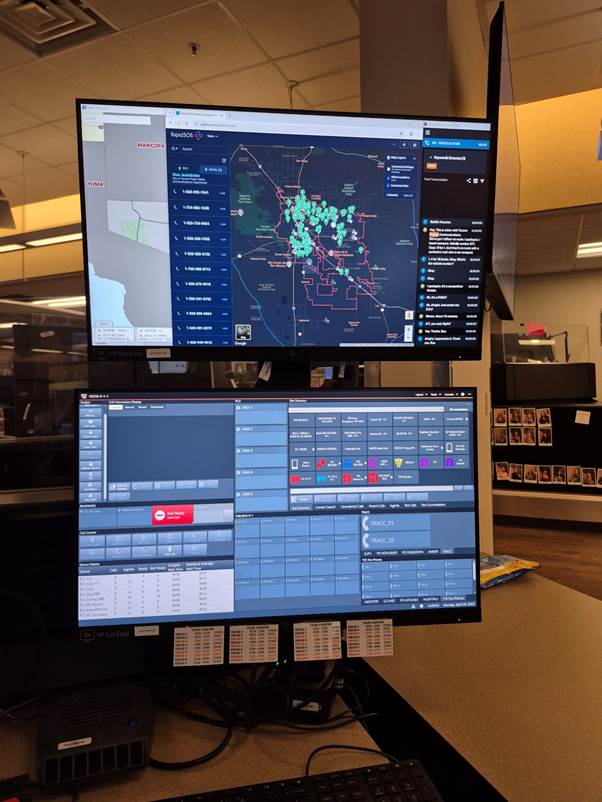
But she did reveal one incident that affected her the most. She had dispatched medical aid to an address where a young boy was experiencing serious health issues. A few days later, she noticed that the same address came up in another case; this time, that young boy was found dead, and the parents were reported to have drug issues. She was sad about the loss of the young boy, but even more concerned about the new development in the investigation and wondered if the drug issue would create a bias and jeopardise the actual issue.
She said that instead of letting her job affect her negatively, she tries to speak up and advocate for change. That advocacy, whether she knows it or not, is an expression of post-traumatic growth.
My last stop was the police dispatch unit, and I sat with Julian (telecommunicator 2) for the next hour. The city of Tucson is divided into four units, and four teams coordinate with police officers in their respective areas. Julian explained his work to me, like Jazmin, he follows up on police-related requests and works directly with police officers. If needed, he runs background checks for people and vehicles.
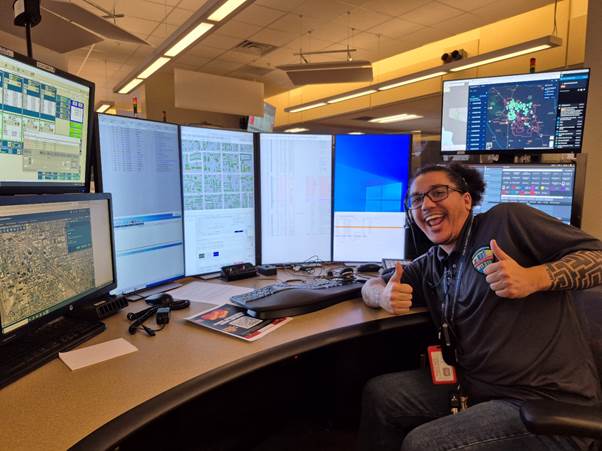
He was explaining different radio codes to me, for example, code 2 means urgent response, code 3 means emergency, and code 4 means no further assistance needed, when I excitedly mentioned, “Yes! I remember these codes being used in The Rookie drama, but I never knew the meaning.”
His body tensed for a bit. I felt a shift in his mood. My overthinking brain was driving me insane. Then he said, “The Rookie starring Nathan Fillion?” I nodded yes. He responded, “We had a police officer who looked a lot like Nathan. He died on duty. Now that drama makes me sad.”

Late Adam Buckner does look a lot like that actor. I will be remembering him whenever I watch the drama.
My time was running short there, and as a public health professional working in mental health promotion for first responders I asked him the same question, “What was the most stressful moment in your job?”
He said that hearing “police officer down” is the most challenging. As he never knows the extent, it could mean anything from the officer being unconscious, severely injured or even dead. While absorbing this information, he has to stay fully focused, managing others on the scene and assisting, all while internally struggling with the uncertainty wrapped in that piece of information.
He also shared a recent incident when a police officer was in an active fight and suddenly went radio silent. Julian could only hear faint radio clicks. It could be an officer’s attempt to reach out. He said those seven minutes were incredibly intense, as he tried to locate and send help. Even a faint clicking sound could be the only sign of distress, and he must never miss it.
I found Julian’s personality good-humoured and upbeat. But when talking about such moments, I could feel the tension in his body. I wish him and all other communication officers the very best. They are the eyes and ears for so many, but they are often left blind. They are the unsung heroes. Without them, whole systems of first responders will collapse. They may not have shiny badges or service cars, but they all have a strong sense of responsibility. They are all a devoted bunch of people who want to help and make their communities better, safer and healthier.
Thank you for your services!
“In our world of big names, curiously, our true heroes tend to be anonymous.”
Thank you for welcoming me and showing me the depth and start of response.
Acknowledgements
University of Arizona
A heartfelt thank you to the mentors, colleagues, and friends who made my experience so enriching. Special thanks to Dean Dr. Iman Hakim for the warm welcome; my supervisor, Prof. Dr. Patricia Haynes, for her unwavering support; Dr. Gabriela Valdez for her guidance and support; Dr. Oluchi Kanma-Okafor, and Student Global Ambassador Lady Dorothy Elli for their meaningful company; and to Roxanna Apaez and Hope Noriega for going above and beyond to make me feel truly at home.

Tucson Fire Department
A heartfelt thank you to all the colleagues at TFD, especially Captain Tyler and Deputy Chief Vera at the Tucson Fire Department, for giving me this incredible platform and the space to grow. Your encouragement and continued support have meant the world to me. I hope this meaningful collaboration continues for years to come.

Ireland
I would like to thank Mr Gerry Boland for sponsoring the Dr Sheila Boland Scholarship, which gave me an amazing opportunity to have a lifetime experience. I would also like to thank Michelle O’Toole, Principal Investigator of HUGS@Home, for trusting me to represent this remarkable initiative in Tucson. Heartfelt thanks as well to Dr. Niamh Cummins, my module lead, for her unwavering support and guidance throughout this journey. Special thanks to all the other faculty members at the School of Medicine, University of Limerick, for their continued help and support.
Last but not least, I would like to acknowledge my wonderful husband, Dr Umair Aleem. Without his unwavering support and encouragement, this would not have been possible. I am forever grateful!

Maimoona Khalid
MSc Public Health AY 24-25
I am an MSc Public Health student, graduating in January. I was born and raised in Pakistan, where I completed my Bachelor’s in Dentistry and worked as a junior dentist. Moving to Ireland and witnessing the global pandemic unfold transformed my perspective—from focusing on individual care to embracing health at a broader, population level.
The programme at UL attracted me with its blend of taught modules, practicum, and research, providing both depth and valuable hands-on experience. Another unique attribute of our programme is that each year, one student is awarded the Dr Sheila Boland Scholarship to complete their practicum in Tucson, Arizona, and I was fortunate to receive this incredible opportunity to work and learn there.
I’ve loved the serenity of UL’s green campus, especially my walks across the Living Bridge, where I’d often pause to reflect by the water. It’s a place I’ll truly miss.
Beyond academics, poetry is my creative outlet; a space where I express my thoughts and emotions, often inspired by people, places, and everyday moments.



 Study Ireland - Stories & Guides from International Students
Leave a comment