
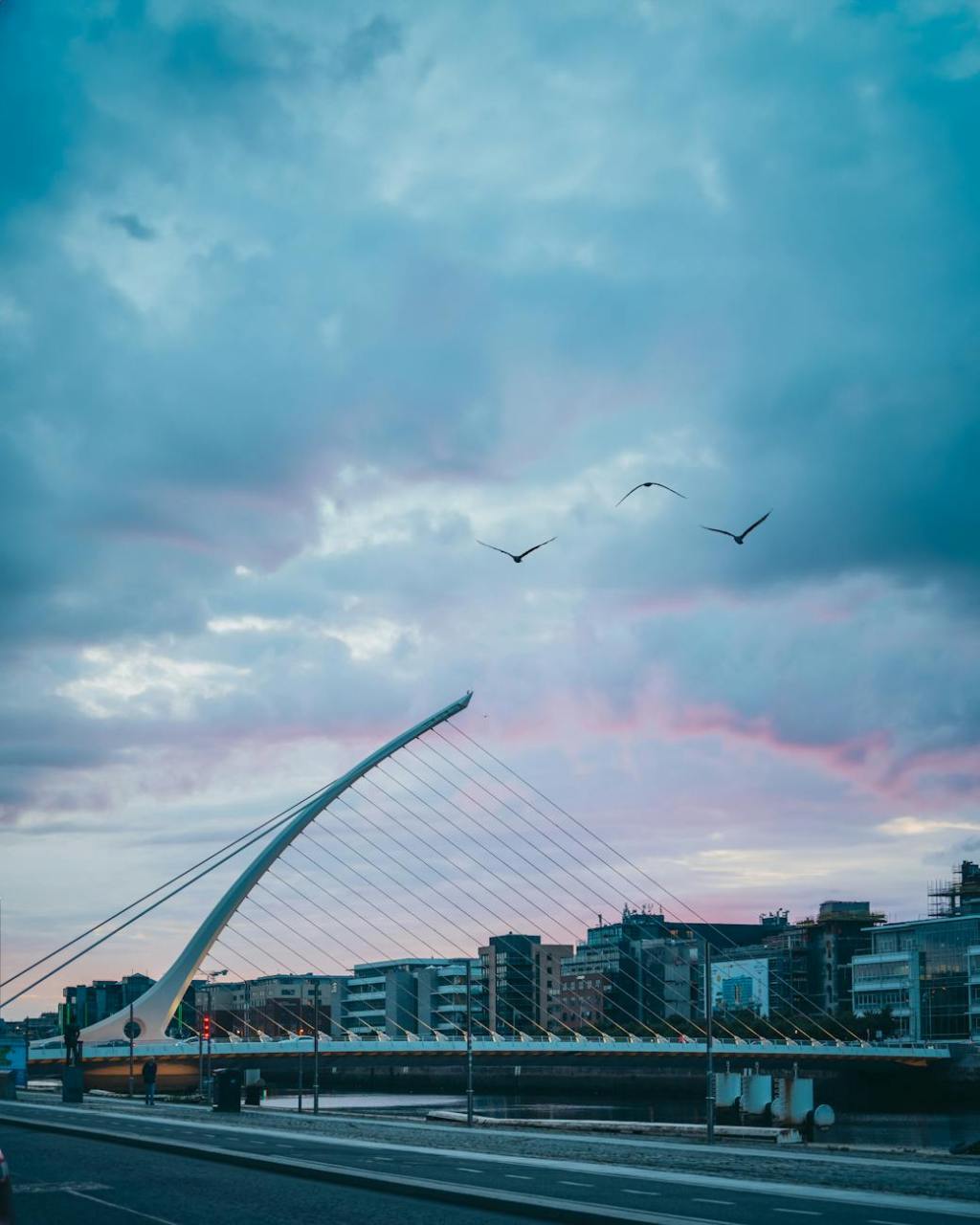
It is virtually impossible to imagine Ireland without Dublin coming to mind. A shimmering jewel of a city in Ireland and Europe alike, Dublin, also known lovingly as the City of a Thousand Welcomes, has something for everyone. The day I spent there in early October was magical, and, though my visit was shy of 24 full hours, the time I was there filled me with excitement, wonder and appreciation for everything outstanding in our world. As such, I am overjoyed to present to all readers in this blog post my experiences in Dublin. They follow in an itinerary based on the order of events that day.

Landmarks are key cultural markers for many cities worldwide, and Dublin’s are no exceptions. Upon arriving in this marvellous city, I first saw the River Liffey, the proud body of water which made history at the 1924 Paris Olympic Games by being the subject of The Liffey Swim, artist Jack B. Yeates’ submission capturing the prior year’s race which won a silver medal – the first for the then-Irish Free State. The titular river truly is a sight to behold as both its presence and solace make you stop and reflect on who you are, where you are and life in general.
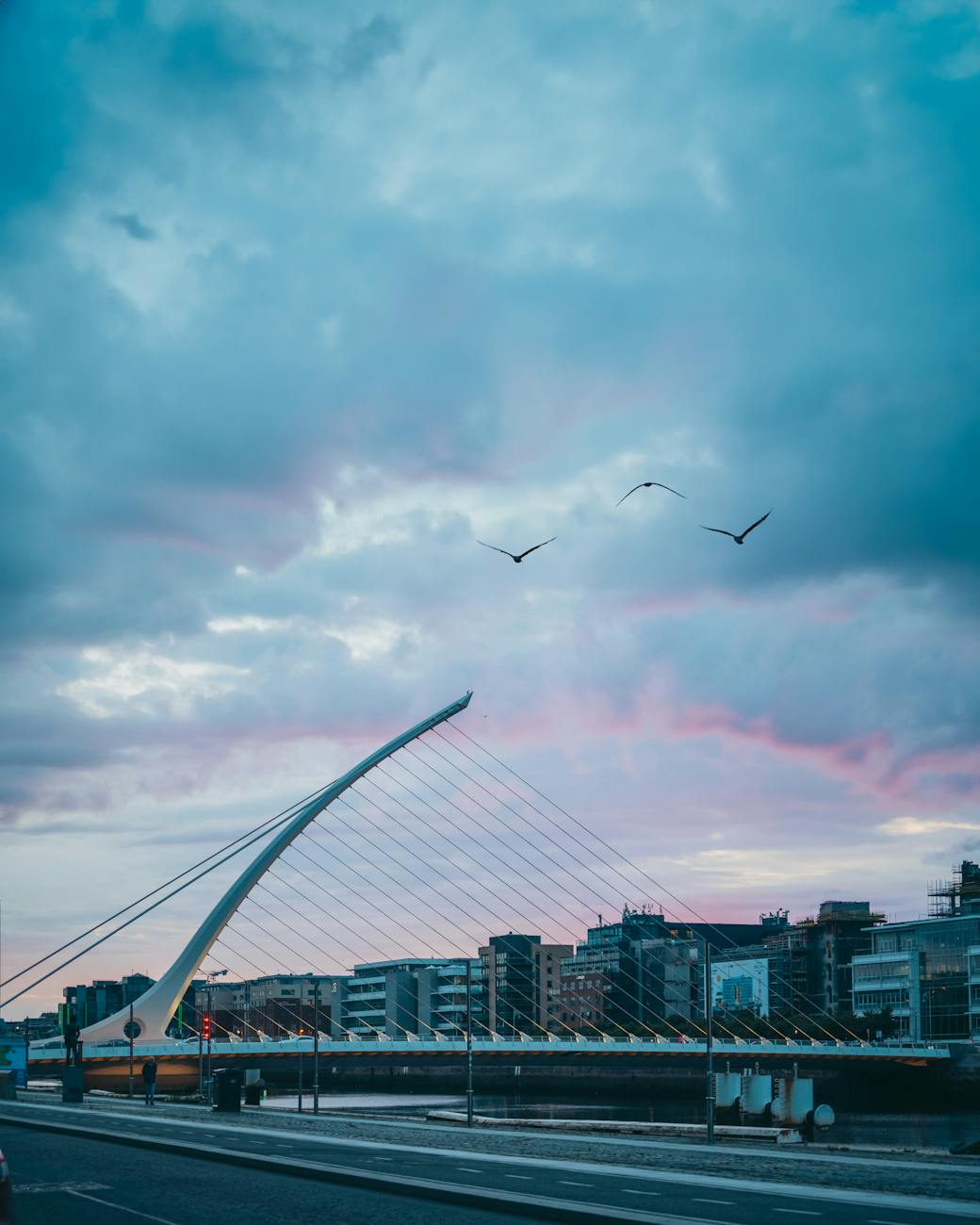
Following the River Liffey’s flow, I came across the Samuel Beckett Bridge. Joining Sir John Rogerson’s Quay south of the River Liffey to both Guild Street and North Wall Quay in the Docklands Area, this structure, which opened in 2009, has become a recognisable part of Dublin amongst residents and visitors alike. Curiously, viewing its design long enough almost resembles a Celtic harp (one of Ireland’s two official emblems, along with the Shamrock) turned upwards. Individual interpretations can vary, and some may perceive to some extent the idea of Ireland’s excellence looking to the sky for further inspiration as well as guidance for the future. Ah, the joys of analysis.
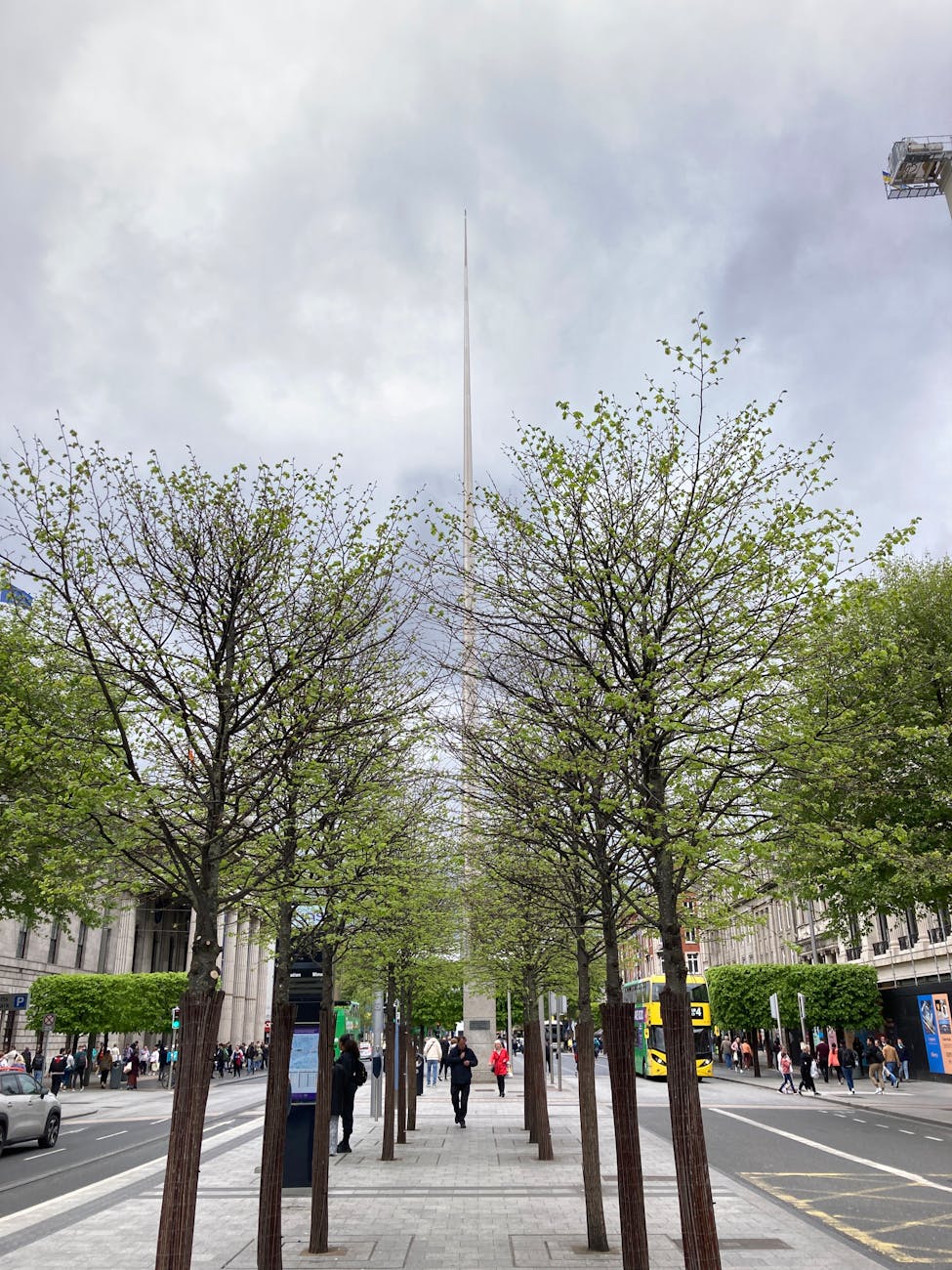
The Dublin Spire was next. Also called An Túr Solais, or Monument of Light, this literal architectural point, which was completed in 2003, is a distinctive landmark standing at 120 metres tall on the site of the former Nelson’s Pillar on O’Connell Street, Dublin’s primary common area. Throughout its existence it has been adapted to fit special occasions, such as when it turned blue nightly in December 2015 from a temporary lightsabre hilt to mark Star Wars: The Force Awakens’ Irish premiere. In May this year The Portal, a visual bridge connecting Dublin to New York City with a livestream showing the Spire on one side as well as the Flatiron Building on the other, along with all the viewers. The Portal was offline when I was there, so its mysteries still await me.
At this point in my trip, I became so curious about the statues of revered individuals from Ireland’s past which I had kept passing that I decided to locate the rest of them. This quest began when I noticed a statue of literary legend James Joyce, the author of seminal novels Ulyssess, The Dubliners and other works, both bespectacled and wearing his signature fedora. I then found statues of Molly Malone as well as Phil Lynott, the woman mentioned in the eponymous song by Irish folk band The Dubliners and co-founder, lead vocalist and main songwriter for hard rock band Thin Lizzy, respectively. Seeing the latter was particularly pleasing for me as I had long wanted to meet this man whose music I cherish. Plus, he always sported the classic-rock look, appearing simultaneously effortlessly and endlessly cool.
The next statue I found was my favourite of the lot. In the northernmost corner of Merrion Square Park I found the Oscar Wilde Monument. As expected the celebrated author, playwright, poet, social commentator, master of wit and dapper gentlemen, the one and only Oscar Wilde, was there, sitting on a rock and glancing into the distance with a half-happy, half-sad expression on his face – much like the iconic comedy and tragedy masks featured prominently in reference to theatre productions.
The location itself is on the corner opposite his former home at 1 Merrion Square as well as around the corner from Trinity College, his alma mater. Wilde’s monument is a three-part sculpture with references from his life, with him sitting atop a quartz boulder from the nearby Wicklow Mountains, Constance, his wife, sitting to his right and the torso of Dionysius, Greek God of youth, poetry, theatre and wine, one of his key inspirations. Constance and Dionysius are carved in bronze in reference to this author’s passion for everything Greek. Wilde loved mesmerising stones, and his monument reflects as much in a cosmopolitan way: His sculpture is made from materials obtained globally, including green nephrite jade from the Yukon, white jade from Guatemala, thulite from Norway, blue pearl granite, black Indian granite, bronze, coloured glazed porcelain and two scarab rings in wore in honour of both good and bad luck. Wilde’s monument truly is a heartfelt celebration of his life.

Between enjoying my brief time with Mr Wilde and finding the final statue, I happened upon Trinity College Dublin. Its campus is open to the public, and exploring it is incredible. The buildings and grounds are preserved, manicured and beautified as necessary to ensure an aesthetically pleasing experience for everyone. Walking through the hallowed halls of such magnificent figures as Oscar Wilde felt dreamlike. I was in disbelief at the fact I was there physically, taking in the atmosphere. That everyone there was kind, polite, understanding and welcoming enhanced my time there significantly. Aside from walking around the campus, visitors can view a free art gallery as well as enjoy a delicious meal at the student lunch hall – at least from what I saw, though I chose to eat elsewhere (but would have happily tried a dish there had I been hungry at that time).
After seeing Trinity College I encountered the last statue of the day in the popular St Stephen’s Green, a public part and common space named after the first Christian martyr where people can socialise, play, relax and otherwise enjoy their lives in a verdant environment. As I made my way through the area (and many pigeons feasting on breadcrumbs provided by parkgoers), I saw it: the W. B. Yeats Memorial. Named after the lauded poet and playwright, ‘Knife Edge’, the central sculpture by Henry Moore, sits in the middle of the series of irregular terraces which form an amphitheatre, known as the ‘Mount’, meant for reflection as well as open theatre. There was a tacit feeling of solemn contemplation present, and I would not be surprised if I had connected with Yeats in some unseen way, not unlike how close I felt with both Joyce and especially Wilde before.
On my way back to the River Liffey, I summoned my inner art connoisseur to enter the National Gallery of Ireland. This cultural institution, which is completely free (but appreciates donations), houses numerous works by artists of different professional backgrounds. There are several thoughtful pieces, archives, including the one dedicated to Jack B. Yeats (W. B. Yeats’ brother) as well as his family, and ways to learn more about what is on display during any given exhibition. The building itself is also worth exploring as its interior can cause patrons to feel rather miniature – at least I felt dwarfed in size. It is all part of the art.
Following my visit to the National Gallery of Ireland I entered the neighbouring National Archaeology Museum. Also free of charge, this building contains artefacts from many different time periods, including Celtic, Egyptian, Cypriot and Viking objects. I found the items relating to Brian Boru and the Battle for Dublin particularly intriguing. Like its neighbour, this museum is massive, featuring seemingly myriad exhibits on two floors whilst making visitors feel diminutive. Really, something about Dublin’s knowledge centres can quite literally change one’s view.
My last stop before boarding the bus back to Limerick was dinner. Though I had considered various restaurants, I decided to eat at Fortune Terrace, a Chinese buffet replete with tasty bites. After an entire day of exploring Dublin on foot, I felt it was wise to dine at a place where I could select everything I wanted for one price. The food was perfect, the service exceptional and my whole time enjoyable. For those considering eating here, it is also worth noting this restaurant offers a discount for students with valid ID.
It was then time to leave Dublin. As sad as I was to go, I was also overjoyed knowing I had spent the entire day in a city full of history, culture, welcoming people and more reasons why being in Ireland gives me total euphoria. I may have left the City of a Thousand Welcomes physically, but its essence will always remain in my heart.



 Study Ireland - Stories & Guides from International Students
Leave a comment