

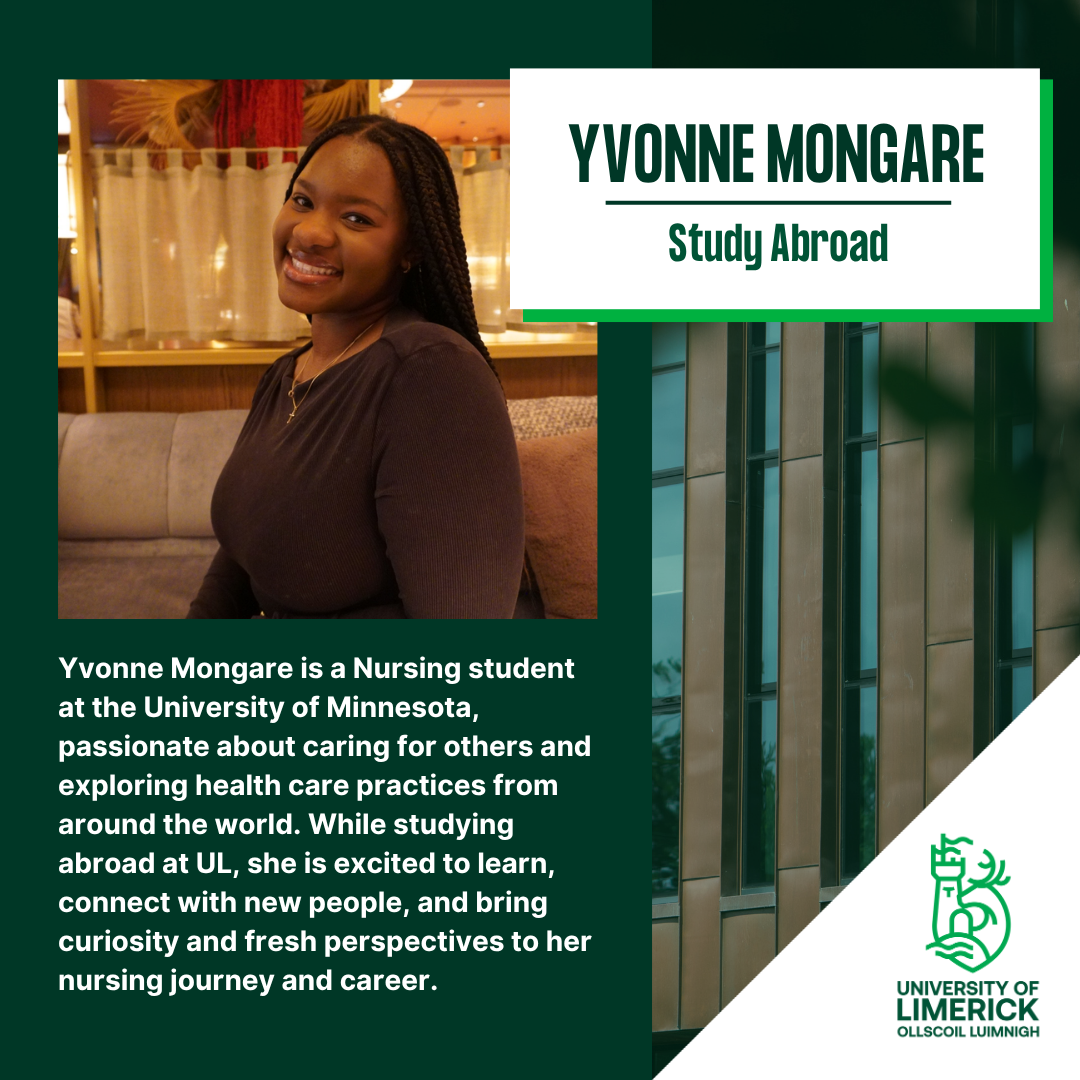
My time studying abroad in Ireland has given me a completely new perspective on healthcare as a system. I have been at the University of Limerick in Ireland for about one month now, and in that short time, I have been deeply inspired to analyze how both Ireland and the United States could learn from each other’s healthcare practices.
It is important to highlight and acknowledge the cultural and systemic approaches that shape how care is delivered within hospitals from both countries. Beginning with nursing education, it seems that the U.S. places a strong emphasis on didactic content. This approach makes sense, as students must pass the NCLEX exam to become registered nurses. In contrast, nursing students in Ireland are automatically registered as nurses upon completing their degree. Additionally, Ireland’s nursing programmes are divided into specific specialties—such as general nursing, midwifery, and intellectual disability nursing—which allows graduates to be more specialized from the start. However, it may be more difficult for certain nursing students to leave their specialty as their majors are not as broad, in comparison to the general BSN degree offered in the U.S.
Irish students also receive significantly more clinical experience in comparison to the U.S. From their first year at university, they can observe nurses on the wards, gaining valuable insight into the profession’s day to day routines early on. This exposure helps students determine whether nursing is truly the right path for them, and if not, they can change their major without major complications. In comparison, clinical hours in the U.S. are more limited and spread out. Going through clinicals in Ireland made me believe both systems could benefit from balance—perhaps a bit more practicum time in the U.S. and slightly less in Ireland.
When I first entered University Hospital Limerick, I was genuinely surprised. Ireland, being a developed nation with strong economic and social systems comparable to those of the U.S., made my transition smoother as an international student. To the naked eye, Ireland is quite similar to the U.S. However, I was surprised to find that Ireland’s public healthcare system (though it also offers private options) still operates in an old traditional way—using paper charting and other manual processes that feel somewhat old-fashioned compared to the almost completely digital health care systems I’m used to in the U.S. It almost felt like stepping back in time. I noticed that workflows moved more slowly, with additional time devoted to documentation and consent forms. While the U.S. also emphasizes consent, this process felt especially thorough in Ireland. I suspected it as a safeguard against potential legal issues.
Witnessing this made me appreciate the efficiency of electronic systems in the U.S., where continuity of care is supported by having all patient information centralized in one place— an electronic health record. Which is also easily accessible for patients at any given time. In Ireland, finding and reading through multiple paper charts takes considerably more time. Patients must request their medical charts to be mailed to them, making the process slower. Additionally, it is not uncommon to see multiple patients sharing a room or even being treated in hallways. Confidentiality and privacy are valued, but in practice, these concepts often take the form of preserving dignity rather than physical privacy.
While these differences were striking, I recognize that both healthcare systems reflect their unique histories. Chronic underfunding, staffing shortages, capacity challenges, and the coexistence of public and private sectors all influence Ireland’s ability to provide timely, accessible care. For instance, patients might wait two weeks for an MRI unless they choose to pay privately for faster service—highlighting the inequities that can arise even within a universal health care framework.
Despite these challenges, one aspect of Irish healthcare stood out to me: the strong patient-provider relationships. Patients often have a more positive outlook on their illness, and the close proximity within wards encourages frequent interaction with nurses and physicians. Many doctors are wearing casual clothing (eliminating white coat fears) and taking time to speak to patients and answer many questions they may have. It’s like caring for a family member. Compared to the U.S., where time constraints can limit rapport-building, the Irish system fosters a sense of connection and trust that contributes to compassionate, patient-centered care.
Overall, these systems have made me understand that health care has a long way to go, even in the U.S. where I may think it’s more “advance”. Disparities to access in health care may look different in these two settings, but they are ever prevalent. I have tried to take and understand pieces of both systems that can benefit from each other. My experience abroad thus far has gifted me with a more open mindset towards the possibilities health care has to serve justice of holistic health and well-being to all people.





 Study Ireland - Stories & Guides from International Students
Leave a comment