

I knew I wanted to climb a mountain when I got assigned to research an aspect of Irish Cultural History for my eponymous class. Why was that my first impulse? I’m not sure, but it is the thought I decided to follow as a starting point for the project.
One of the reasons I chose to come to Ireland for my master’s in History is because when I visited for the first time the thing that stood out to me most was how I saw the people of Ireland living with their history. In the United States we have done a really good job clearing the land of any sign of its history, putting all the things we deem worthy of preserving in boxes behind little velvet ropes, inside buildings, cut off from any of their original contexts. In Ireland I saw the landscape dotted with these moments of history, and the people living their lives right alongside. I recognize I’m romanticizing a complex relationship between the land, the people, the government, and even the livestock, but nevertheless, this was my impetus for studying here in Ireland.
With the idea sown, I followed the thread of my admiration of the Irish Peoples’ connection to their land. I then asked how this relationship had evolved over the millennia? Of course, my presentation could not exceed 15 minutes, so covering the breadth of Ireland’s human-land relationship over that great span of time was simply impossible. I had to narrow my scope and root my sprout of an idea in a single place. I reflected on the places I had connected to over the short bits of time I had had the opportunity to explore the country, and about the other events in my life that had shaped my personal connection to land and history. These were all easily linked to the mountains. I found that the times I felt most connected to these complexly interconnected ideas was when I was participating in the age-old tradition of walking on the land, literally tracing the footprints of thousands (tens, hundreds, or even a million) of years of human lives. By definition a pilgrimage, but not religiously affiliated. A practice historically sacred to the lives of the Irish People as well as so many other countless cultures throughout the world and across time. This of course lead me to Croagh Patrick.
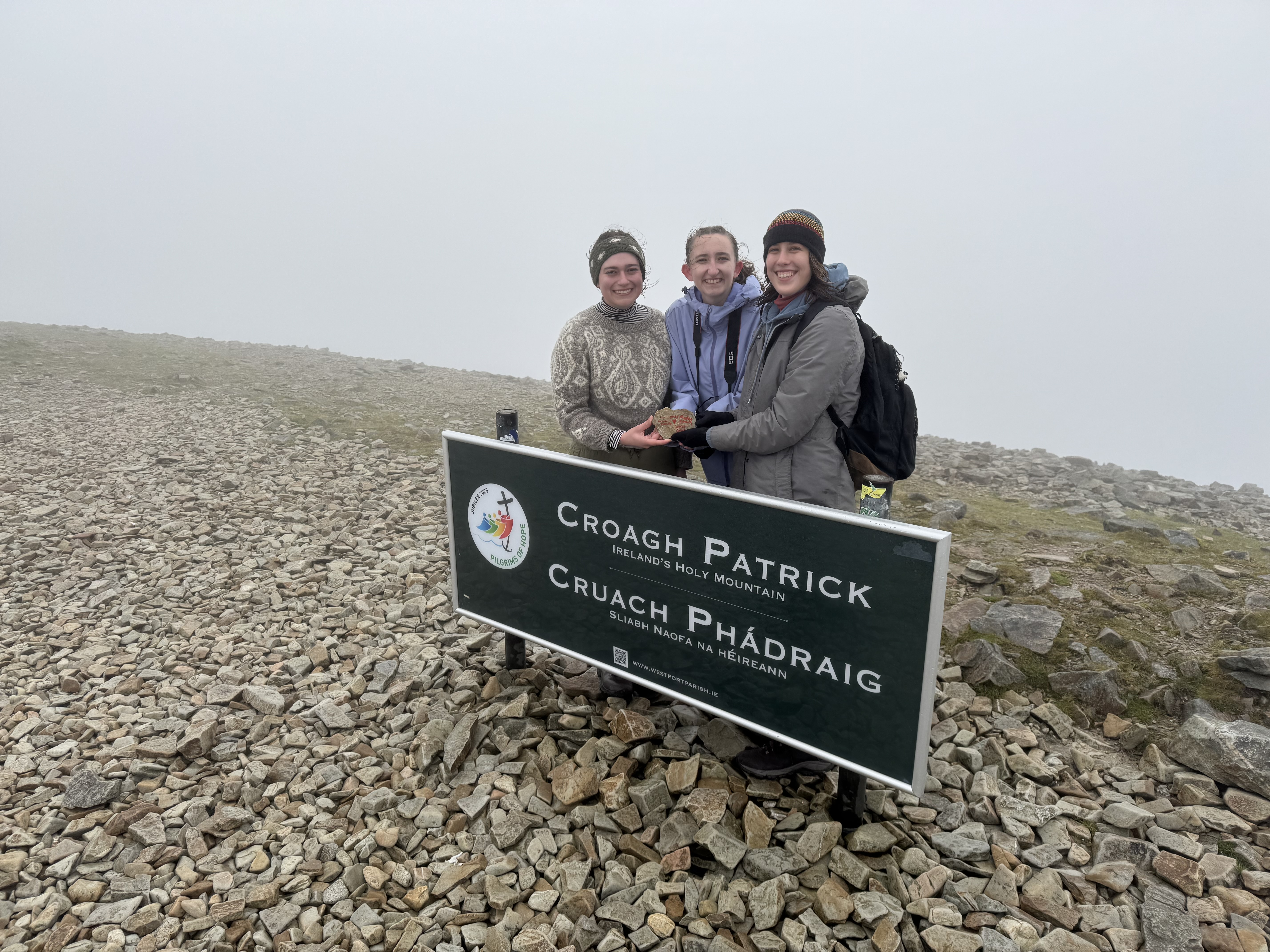
I had the opportunity to climb Croagh Patrick for the first time back in 2022, it was in fact the first thing I did when I arrived in Ireland. This was also the first adventure I experienced after 18 months spent on a small island off the coast of Maine during the COVID-19 lockdowns. I know that whatever I had chosen to do after 18 months isolation would have been an impactful experience, but this climb marked a moment of my reconnection to the land.

I am by no means an athlete; an activity requiring endurance is not where I shine, but an act of determination, dedication, and physical exertion felt like the first demonstrable achievement I had made in almost two years. In that time, I had graduated my bachelor’s without a ceremony, my capstone project I had spent hundreds of hours on submitted silently through email with no fanfare. On the mountain though, I looked back and saw my progress, truly let myself feel the frustration, grief, and joy, I felt the sweat and the wind and the ground below my feet. This was my own experience, yet I knew there were hundreds of thousands of iterations of my story which had taken place right in the same place on this mountain.
Croagh Patrick became the root of my inquiry, the spiritual beacon for so many. I wanted know why we as humans feel drawn back to the land when in search of hard truths, reflection, and in that moment academic inquiry.
My thesis was flimsy, as I went back and forth on what perspective I wanted to take, and on what research I felt was valid to use in a postgraduate level class. I thought about the little mountaintop chapel, a unique feature when it comes to mountain tops, but it still felt hollow, and I was at an impasse, frustrated in my directionless efforts. The mountain was calling to me, or maybe I was calling to the mountain, after all it had been my first thought when the project had been introduced.
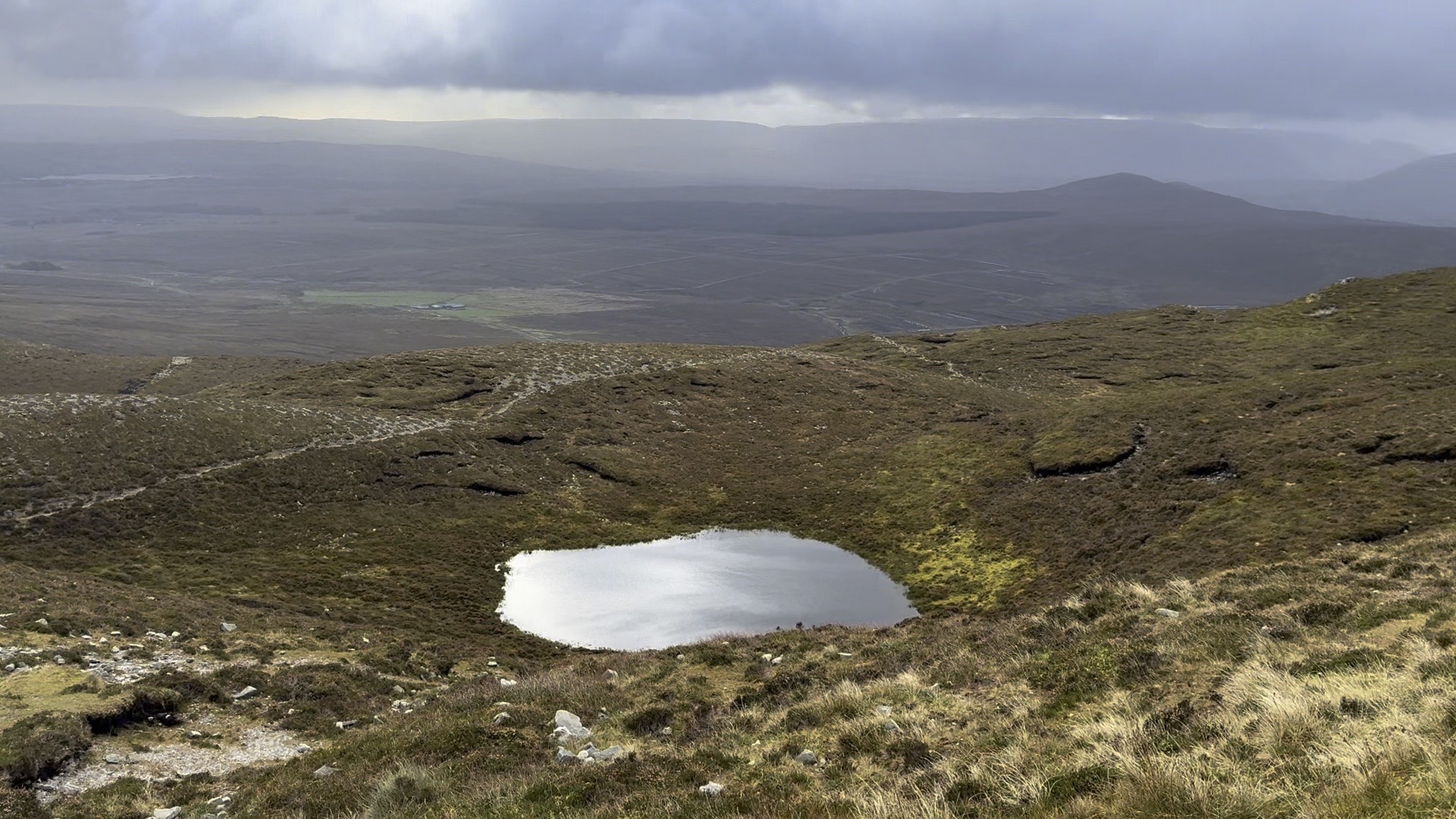
I come from the Human Ecological school of philosophy when it comes to learning, that is in part, I suppose, the core belief that we learn best when directly connected with the subject. It entails not just thinking about these questions of culture, heritage, history, and society, but embodying them. Which means in this case, yes, quite literally climbing the mountain.
I was certain I needed to follow my human ecological impulse to create a project I could proudly stand behind. So, I took my two friends, Maddy and Laurel, who so wonderfully supported and collaborated on my experiential method of research, and we drove the 2 and a half hours or so up to Westport in co. Mayo. It was the first weekend in October, the little seaside town was misty and windswept in the aftermath of a windstorm, and the Old Mill Holiday Hostel was chilly. We made dinner at the hostel surrounded by other intrepid adventurers and called it a night well before 10 o’clock. We rose at 7 and scrambled to check out and acquire the all too important cup of morning coffee. Our drive saw us take the swerving rural roads which ran along the foothills of the mountains and the coast of Clew Bay, a 15 minute’s drive if you don’t drive like an old blind dog, which I do, it took us about 20 minutes.
The car park was quiet, and we looked up at the conical mountain whose peak was in and out of cloud cover. We steeled ourselves. Cameras in hand and extra layers in tow; we began the 7-kilometer trek.
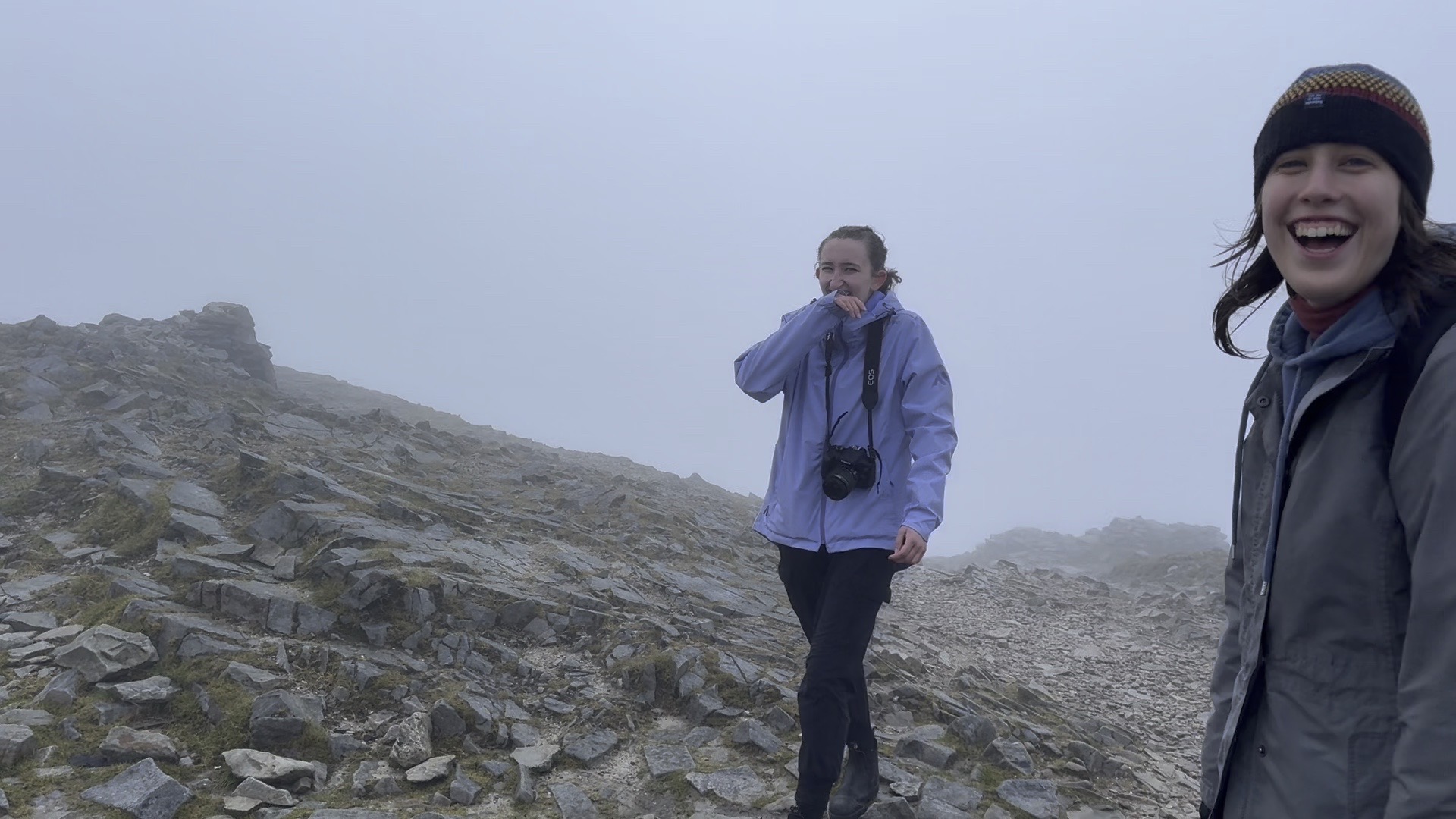
It was glorious walking up the path the last of the year’s heather in bloom, and the mountain stream singing merrily beside us, and then the familiar fatigue set in. My legs burned, my lungs were simultaneously on fire and frigid, my forehead sweaty but my fingers icy. It was a pain, and yet it was a delight. I complained, as I find myself doing it whenever I hike, but I also found my head swimming with ideas, another common occurrence when hiking. I felt inspired; at last there was a purpose and direction for my project. I had spent the trip joking that the whole point of the hike was so I could ask the mountain questions, and absurd as it sounds, it obliged. My mind raced reflecting the clouds that swept over us as we made our ascent.
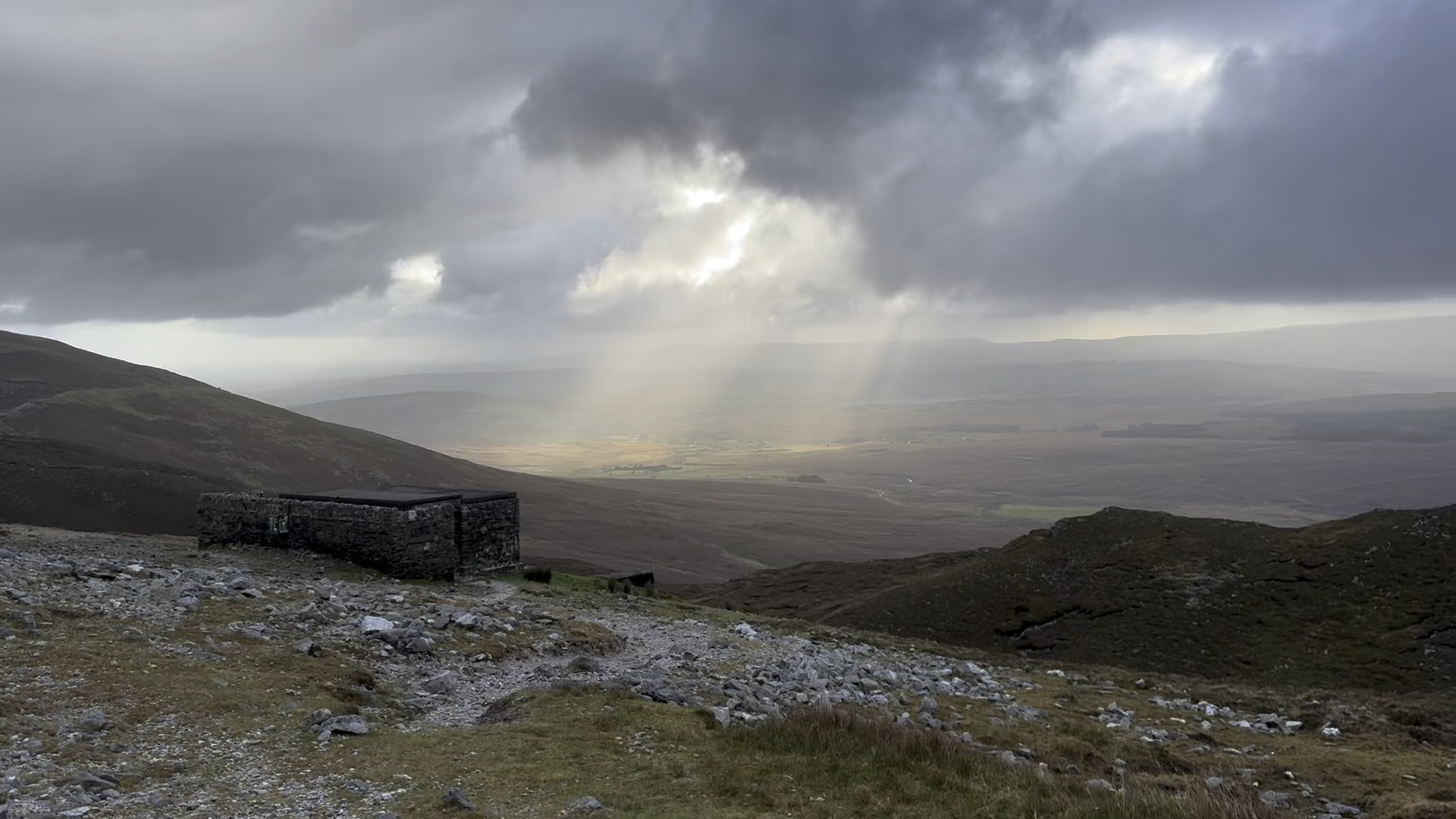
Four and a half hours later, tired and damp, but content we changed our soggy socks, packed up the car, thanked the mountain, and headed back to Limerick. My questions answered, and my connection and affinity for the land, the culture, and my friends deepened.
I wanted that holistic experience to be reflected in my presentation, so with an immense amount of help from my friend, Laurel, who so masterfully edited and arranged the film and recording we set about creating a documentary. The goal was to create a documentary with a chronological narrative which followed the pilgrim from the start of the journey all the way to the summit.
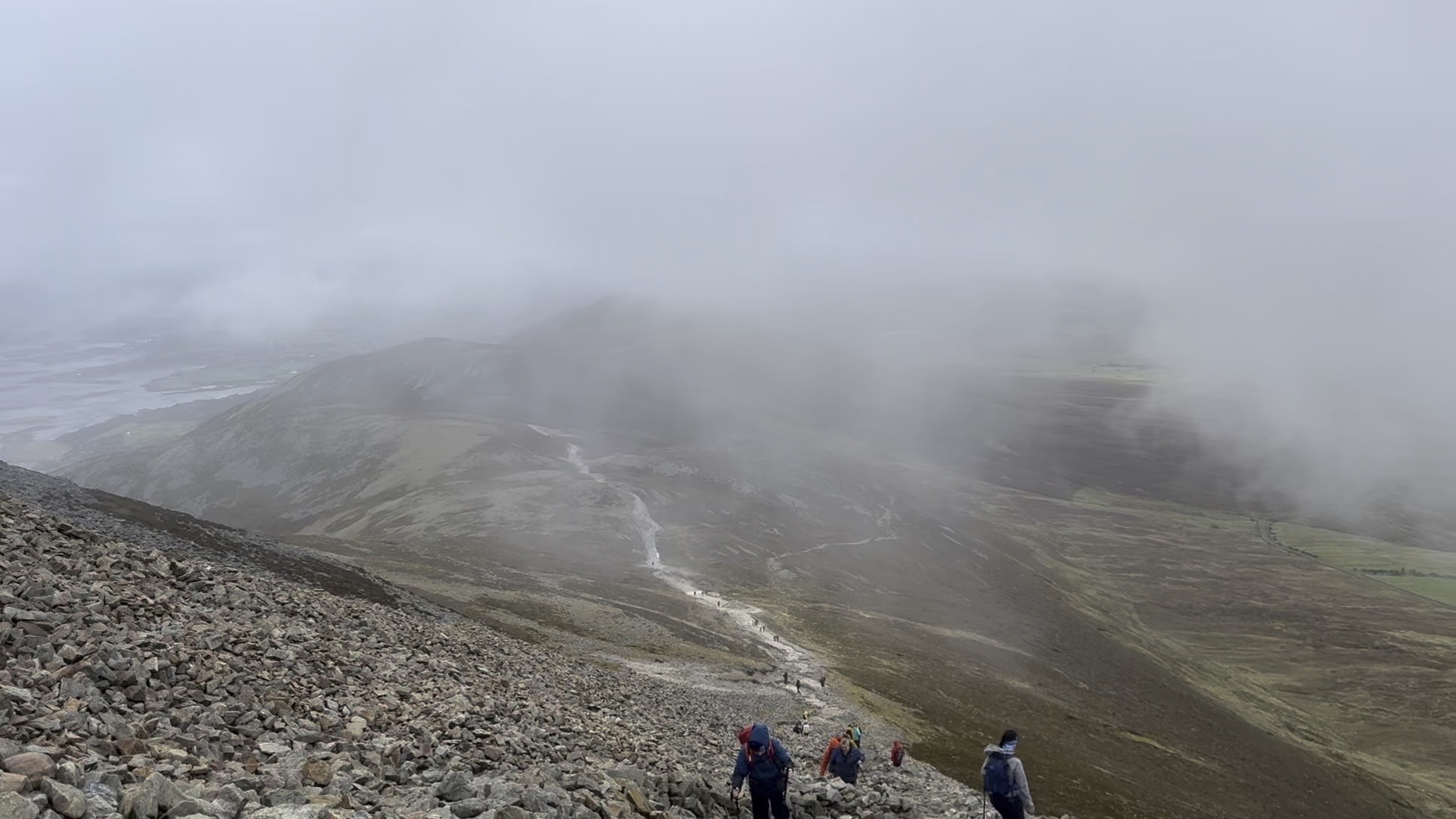
The process from start to finish taught me a lot, as I haven’t been a student in about five years. It brought me back to the classroom and the library, but most importantly to the mountain. I found my learning and quality of work flourish just by going out to experience the place where my question was rooted. I believe wholeheartedly that other students would find that to be true too if they went to the root of their own questions (their proverbial mountain), left the classroom, the library, or the lab for a moment to really feel and connect to their question. This experiential approach enriches the academic experience, and builds connection to self, community, and the land in profound ways.


 Study Ireland - Stories & Guides from International Students
Leave a comment