

Hey everyone! If the whole student/graduate visa thing is making your head spin, don’t worry—I’ve got you covered! Immigration stuff can be super overwhelming (been there, done that!) after 5 years as a Malaysian student studying and working in Ireland. I know firsthand how confusing and wordy those official websites can be, and trust me, it’s not fun. I seriously wish I had a guide back when I was dealing with all those stressful moments! So, that’s why I’m here now—to help YOU avoid the same hassle. Every little tip helps, and I’m ready to share mine! Let’s do this together!

Part 1: Types of Student Visas
There are a few different types of student visas to consider, so let’s break it down! If you’re a full-time student (not on an Erasmus or exchange program), you’ll need to apply for the Student Visa (Stamp 2). This lovely little visa is your golden ticket to studying at an Irish educational institution for a set period. Plus, the best part? If you have a Stamp 2 visa, you can work casually without needing a work permit (more on that later!).
Now, if you’re from certain countries, there are arrival visa requirements to keep in mind (check out this Visa requirements for entering Ireland (citizensinformation.ie) for details). If you are like me as a Malaysian citizen, you won’t need an arrival visa!
For the most part, though, the Stamp 2 student visa is the go-to option for full-time (undergraduate, postgraduate, or PhD) students. So, let’s dive deeper into that!
Part 2: Registering with Immigration in Ireland (GNIB/IRP Card)
It used to be all about making appointments at your local immigration office, but guess what? As of July 2024, renewal applications from the Limerick office have officially moved online!
But for first-time applicants, you’ll need to book an appointment at the Dublin immigration office. Once you arrive at the University of Limerick, it’s time to secure your immigration appointment. You can easily do this by calling the Freephone number (1800 800 630) , operators are available from 9 AM to 5 PM, Monday to Friday to help you set up your appointment. When you get in touch, make sure to have your passport number and email address handy! Your appointment will be at the Registration Office, 13-14 Burgh Quay, Dublin 2 (map link: University of Limerick to Garda National Immigration Bureau – Google Maps. ) Easy peasy!
Required documents:
Before heading to your appointment, make sure you have all the required documents in hand! Important note: If you don’t bring the necessary paperwork, the immigration officer won’t be able to complete your registration or issue your Irish Residence Permit card, and you’ll have to book another appointment to finish the process.
HERE’S WHAT YOU WILL NEED:
- Your passport (or an equivalent document issued by an authority recognized by the Government of Ireland).
- Printed copies of the required documents (you can find them here). Remember, electronic copies won’t cut it!). Make sure to check the relevant section for your study level:
- Section 2: Undergraduate student
- Section 3: Master’s / Higher Diploma student
- Section 6: PhD student
- Section 7: Erasmus student
- Here’s a quick list of the essential documents you should bring:
- Offer letter from UL
- Proof of tuition payment
- Proof of financial support
- Medical insurance
- Visa application fee
On the day of your appointment, you will be required to pay a fee of €300. Please note: Immigration only accept credit/debit card payments. They are unable to accept cash, cheques, or contactless payment (apple pay, google pay).
I’ve listed some key documents above but be sure to check the website for the most updated version! Do arrive 10, 15 minutes early of your appointment and !! AVOID BEING LATE !!
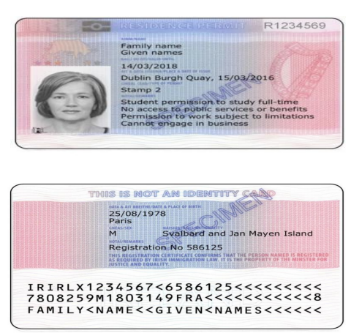
GNIB Card: The GNIB (now called the Irish Residence Permit or IRP) is your official ID that proves you’re living legally in Ireland. It shows you’ve registered with immigration and have permission to stay.
You’ll need this card for lots of things, like opening a bank account, applying for a driver’s license, and even getting healthcare. Employers may ask for it, too, to confirm you can work here.
After you apply for your GNIB card, it usually takes about 4 to 8 weeks to arrive. If it takes longer, you can contact the Garda National Immigration Bureau or the Irish Naturalisation and Immigration Service (INIS) for updates.
Once you have your GNIB card, you’re all set to enjoy your time in Ireland!
Part 3: Part-Time Work and Visa Conditions:
If you’ve got a Stamp 2 visa in Ireland, you’re in luck—you can work part-time while hitting the books! You’re allowed to work up to 20 hours a week during term time, and when those holidays roll around (hello, summer break and Christmas!), you can work up to 40 hours a week!
But hold up—before you start applying for jobs, you’ll need to grab yourself a Personal Public Service (PPS) number to work legally and make sure you’re following those Irish tax rules. Just a heads up: this work is meant to boost your income, not be your main source of funds. So, be sure you’ve got enough money to support yourself while you’re busy studying. Now, go out there and balance that work-life-student life like a pro!
Part 4: Tips for a Smooth Immigration Process
For a smooth immigration journey, here are a few must-do tips! First, make copies of EVERYTHING—visa, passport, insurance—you name it. Trust me, losing a document is no fun, so keep backups just in case. Next, don’t forget travel insurance! It’s your safety net for any unexpected hiccups (because nobody wants a surprise medical bill!). And finally, jump into UL’s international student Facebook or WhatsApp groups. It’s a great way to ask questions, share tips, and connect with others who totally get what you’re going through!
Link to the Official Immigration Page:
[Immigration permission/stamps – Immigration Service Delivery (irishimmigration.ie)]
Lastly, Don’t Stress!
The visa and immigration process might feel like a lot, but with a little prep and patience, you’ll breeze through it. Stay organized, get things done early, and take it one step at a time. And hey, if you hit a snag, the UL International Office (email: ulglobal@ul.ie) has your back. They’re total pros at helping students navigate this stuff, so don’t be shy about reaching out! You’ve got this!





 Study Ireland - Stories & Guides from International Students
Leave a comment